
 Latest:
Whether you’re a supplier or an educator, find out what it means to be Backed by BESA Read more

Common mistakes schools can avoid when buying classroom furniture
Published
Wednesday, 23 September
Categories
Share
Buying classroom furniture isn’t an everyday task for most schools. When the time does come to replace chairs, tables or storage, there can be a lot to weigh up – particularly when budgets are tight and products that look relatively similar can vary significantly in price.
Ultimately, classroom furniture is one of the longest-term investments you can make, and what looks like good at first may feel very different after several years of daily use.
So, what should schools be thinking about before they buy?
We asked Della Perry from BESA member organisation, Metalliform, which has been manufacturing furniture for education settings from its Barnsley headquarters for more than 80 years, to share some of the most common mistakes schools can avoid when investing in classroom furniture.
Here’s her advice, alongside some additional tips from BESA to help you ask the right questions when choosing a supplier.
Mistake #1: Choosing on price alone
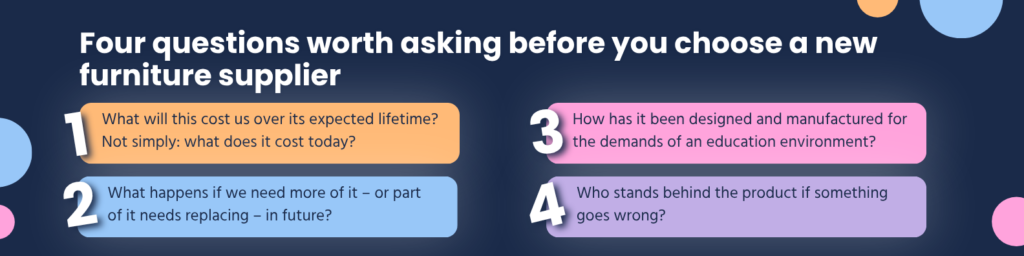
Price will inevitably be part of any school purchasing decision. The important question is what you’re getting for it. Rather than comparing the upfront cost alone, Della recommends considering the duration of the furniture you’re buying.
How long is it expected to last? What warranty comes with it? Can damaged components be replaced? What happens if you need support two years after purchase rather than two weeks?
A lower purchase price can quickly lose its appeal if furniture needs replacing sooner or it can’t be easily repaired.
BESA tip: When comparing quotes, ask suppliers the same questions about lifespan, warranties, repairs and after-sales support. It makes it much easier to compare value rather than simply cost.
Mistake #2: Not thinking about how the furniture will be used
A table or chair might meet the basic requirements on paper, but Della recommends thinking carefully about who will use it, how often it will be used and for what purpose.
Age and size are obvious considerations, but think beyond these. Will furniture need to be moved regularly? Does the space need to be switched between different activities? Will pupils need to work independently or together? Are there additional accessibility or SEND requirements to consider?
Furniture designed specifically for education should take into account the realities of a busy school environment, rather than simply fitting into the available space.
BESA tip: Consider the people who will be using the space before making a significant purchase. Teachers, support staff and pupils may spot practical requirements that aren’t immediately obvious from a floor plan or product specification.
Mistake #3: Overlooking durability and maintenance
A product photograph can tell you what a chair or table looks like. It tells you much less about how it has been made or how it will perform after several years in a busy classroom.
Della advises looking beyond the finish. What materials and construction methods have been used? Has the product been designed specifically for education? Has the furniture passed the British testing practices? How easy is it to clean and maintain? And what happens when one component becomes worn or damaged?
Schools shouldn’t feel uncomfortable asking detailed questions. An experienced furniture supplier should be able to explain what makes a product practical, durable and fit for purpose in an education environment.
BESA tip: Ask what can be repaired or replaced rather than assuming the whole product will need to be discarded. This can improve long-term value and help schools reduce unnecessary waste.
Mistake #4: Not asking who designed and made it
Where furniture comes from might not be the first thing on a school purchasing checklist, but Della believes understanding what sits behind a product can tell you a great deal about what you’re buying.
Ask where products are designed and manufactured, how quality is controlled and how closely the supplier oversees the process.
For example, Metalliform designs, manufactures and assembles its furniture at its Barnsley headquarters. Having those processes under one roof gives the company close oversight of how its products are made and how decisions at the design and manufacturing stages affect the finished product.
That doesn’t mean there is one manufacturing model schools should look for. The important thing is that a supplier can confidently explain where its products have come from, how they have been made and the standards they meet.
BESA tip: Look beyond the product itself when choosing a supplier. Ask about quality assurance, relevant standards, delivery, warranties and what support will be available after your order arrives.
Metalliform is Backed by BESA and, like all BESA members, commits to our Code of Practice – setting out the standards of quality, integrity and accountability expected of companies supplying the education sector.
Looking for classroom furniture? Explore Metalliform and other trusted furniture suppliers in the BESA Member Directory.